

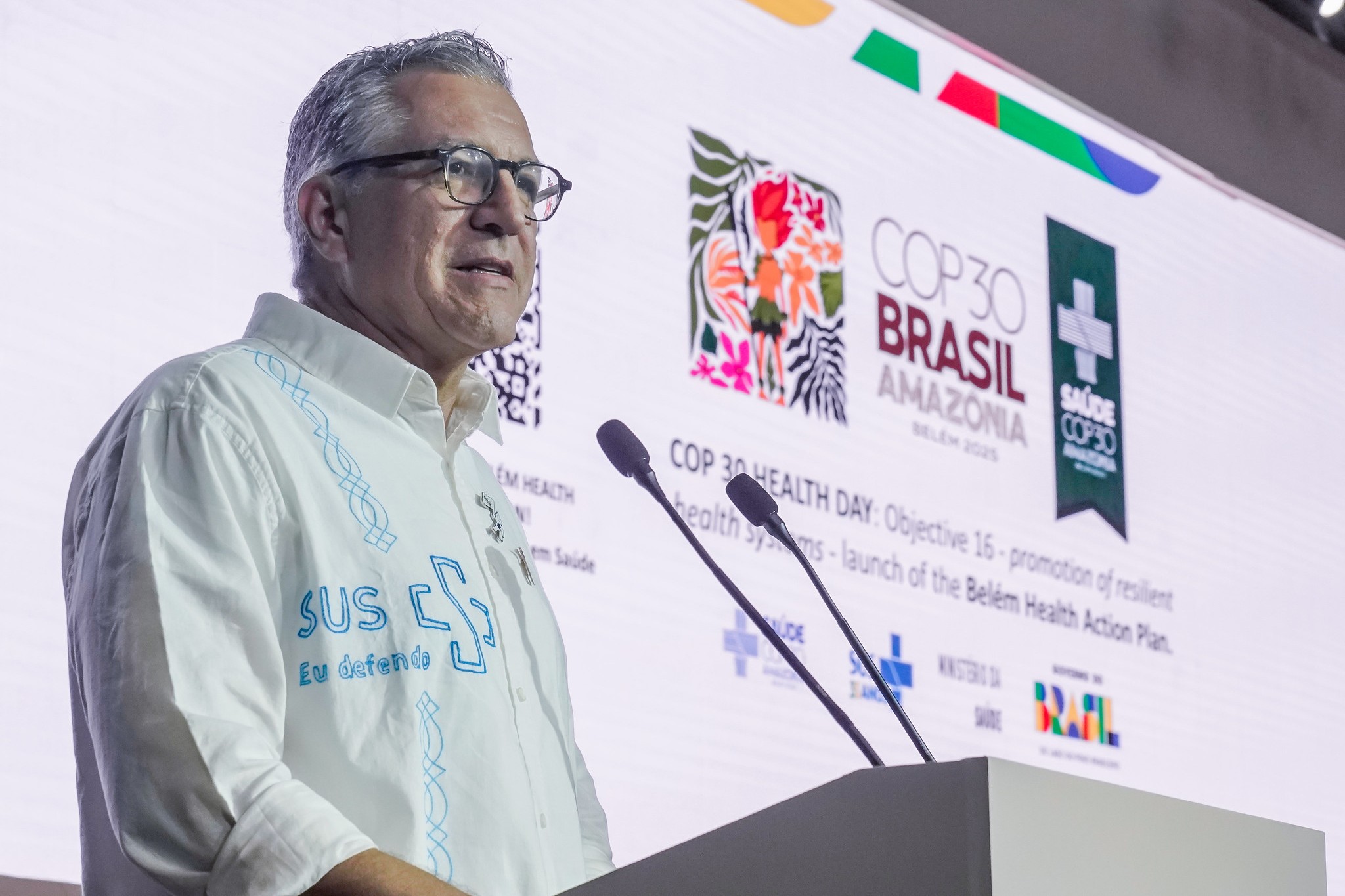
Launched at COP 30 in Belém, Brazil, the Belém Health Action Plan (BHAP) marks a watershed moment: it is the first international climate adaptation framework dedicated entirely to the health sector. Recognizing that the climate crisis is, first and foremost, a health crisis, the BHAP provides a crucial roadmap for nations to urgently prepare their health systems to withstand the escalating shocks of extreme weather and environmental change.
Developed under the leadership of the Government of Brazil and the World Health Organization (WHO), the plan moves beyond broad declarations to outline 60 concrete action items grounded in two essential, non-negotiable cross-cutting principles: Health Equity and Climate Justice and Leadership and Governance with Social Participation. This focus acknowledges that climate impacts disproportionately burden the most vulnerable, the poor, the elderly, women, and Indigenous Peoples, and that effective solutions must be co-created with the communities most at risk.
The Belem Three Pillars for Adaptation and Resilience
The BHAP is organized around three interrelated lines of action, or pillars, which together form a comprehensive strategy for health sector adaptation globally.
1. Integrated Surveillance and Monitoring Systems
The foundation of climate resilience is the ability to anticipate and track threats. This pillar calls for a radical overhaul of traditional disease surveillance to incorporate real-time climate, environmental, and social data.
- Climate-Informed Early Warning – The plan mandates establishing and strengthening systems that link meteorological agencies with health institutions. This enables predictive modelling to forecast climate-sensitive public health threats, such as when a heatwave or heavy rainfall is likely to trigger a surge in heatstroke or a cholera outbreak. Early warnings must be clear, accessible, and communicated promptly to all relevant stakeholders, including local communities.
- Disease Identification – A key, novel component is the call for countries to regularly identify and update a list of their specific climate-sensitive diseases. This guides national surveillance and resource allocation, ensuring that diseases like dengue, malaria, and cholera, whose spread is amplified by warmer temperatures, are actively monitored and contained as their geographic ranges shift.
2. Evidence-Based Policies, Strategies, and Capacity Strengthening
This pillar focuses on translating scientific evidence into actionable policy and building the human capacity to execute it.
- Policy Integration – The BHAP urges countries to integrate health objectives into their Nationally Determined Contributions (NDCs) and National Adaptation Plans (NAPs) under the Paris Agreement. This ensures that major climate policies automatically consider and mitigate health risks.
- Climate-Proofing the Workforce – Training and capacity-building are central. The plan calls for training over 12,000 health professionals to better anticipate and respond to the health effects of climate change. This includes emergency preparedness training for health workers, ensuring they can deliver care when infrastructure fails, and training policymakers in climate-health governance.
- Preventative Interventions – It explicitly recognizes the critical role of vaccination and immunization in climate adaptation, noting the need to maintain and monitor vaccine cold chains (often supported by solar power) and essential health product stockpiles to ensure continuity of care during emergencies.
3. Innovation, Production, and Digital Health
To address resource constraints and rapidly scaling threats, the Belem Action plan stresses the need for technological and infrastructure innovation.
- Sustainable Health Care: Recognising that the health sector itself contributes around 5% of global greenhouse gas emissions, the plan advocates for a just transition to low-carbon health systems, using the financial savings from decarbonization to fund adaptation and resilience measures.
- Resilient Infrastructure: This is about “climate-proofing” health facilities. The plan envisions hospitals and clinics built to withstand climate shocks (floods, high winds) and powered by renewable energy (like solar panels) to prevent operational shutdowns during grid failures. The goal is to expand initiatives like the Smart Hospitals Initiative, which aims to ensure continuity of care.
- Digital Tools: The BHAP promotes the adoption of telehealth platforms to extend care to remote or disaster-hit areas and encourages the use of digital monitoring tools to track the health of vulnerable populations and the resilience of supply chains.
The Finance and Implementation Reality Check
While the BHAP received significant endorsement from over 80 countries and international partners, a critical gap remains: financing. In this new era of reduced donor funding, and new financing pathways for development, the issue of how finance can affect BHAP cannot be overstated.
- The Funding Gap – A WHO Special Report released at COP 30 estimated that the health sector’s adaptation needs alone will require approximately US$22 billion annually by 2035. Yet, less than 1% of global climate finance is currently allocated to health system resilience.
- Philanthropic Support – In a welcome but insufficient move, the Climate and Health Funders Coalition, a group of over 35 philanthropic organizations, announced an initial US$300 million investment to support the plan’s implementation, focusing on research, innovation, and evidence integration.
- Call for Government Action – The ultimate success of the BHAP hinges on governments and multilateral financial institutions stepping up. It is a voluntary framework of best practices, meaning its impact is directly tied to the political will to mobilize billions in funding to protect lives and livelihoods, especially in highly vulnerable nations.
The Belém Health Action Plan provides a clear, detailed, and human-centered blueprint. It is the international community’s shared commitment to transition from merely diagnosing the climate-health crisis to actively building an equitable, resilient health future.
You can watch a short overview of the launch event and its goals by checking out Belém Health Action Plan Launched at COP30 on YouTube.
