

The global health sector stands at a critical, paradoxical intersection: it is on the frontline of treating climate-related disasters, yet it significantly contributes to the crisis it seeks to solve. Estimates indicate that the healthcare sector is responsible for an estimated 4.4% to 5% of worldwide greenhouse gas emissions, an output equivalent to 514 coal-fired power plants. This is the Climate Cost of Care.
For organizations like ours working in the Global South, this isn’t just an abstract ethical dilemma; it’s a tangible, immediate threat. Health facilities in vulnerable nations desperately need resilient, reliable power to maintain life-saving services. Despite contributing less than 5% to the world global emissions levels, countries across the global south face a dire consequence of the emissions produced. And while we have calls and action plans to reduce CO2 emissions, the regions is simultaneously contributing to the very warming that destabilizes our electrical grids and brings patients through our doors because of limited clean energy generation sources. From our perspective, the solution lies in a necessary and urgent pivot towards climate-smart healthcare.
The Hypocrisy of High Emissions
The primary sources of the health sector’s massive carbon footprint are its complex supply chains, energy consumption, and transportation. These emissions fuel the warming that drives extreme weather, leading to a disastrous feedback loop:
- Supply Chain Emissions (The Majority) – The production, packaging, and transport of pharmaceuticals, medical devices, and other consumables, many of which are manufactured overseas, account for the bulk of healthcare’s carbon footprint.
- Energy Use – Hospitals, particularly in the developed world, are energy-intensive facilities, relying heavily on fossil fuels for heating, cooling, and electricity.
- The Diesel Dependency Trap – In the Global South, many essential health facilities rely on diesel generators as their primary or backup power source due to unreliable national grids. This ensures continuity of care during blackouts but emits polluting particulates and CO2 directly into the atmosphere, often in densely populated urban areas.
This reliance on fossil fuels, whether in manufacturing or in emergency power, undermines the core mission of healthcare, to do no harm.
The Power Paradox in the Global South
While developed nations focus on reducing emissions from their over-reliance on energy, the challenge in the Global South is often more fundamental: the lack of any reliable energy. The World Bank and the WHO have highlighted the stark reality that a large percentage of health facilities in Sub-Saharan Africa and South Asia lack the basic infrastructure for reliable electricity.
Without dependable power, a health facility cannot;
- Maintain Cold Chains – Vaccines (including vital childhood immunizations and the new climate-sensitive vaccines for dengue/malaria) spoil without reliable refrigeration.
- Perform Critical Surgeries – Operations requiring continuous monitoring and reliable lighting become impossible during outages.
- Run Essential Diagnostics – Modern imaging and lab equipment are rendered useless.
When a climate shock like a cyclone or a severe heatwave causes a widespread grid failure, the diesel generator is often the only thing standing between life and death. The goal, therefore, is not to eliminate emergency power, but to transform it into a resilient, low-carbon asset.
Advocacy for Climate-Smart Healthcare
The solution lies in a unified approach that pursues both mitigation (reducing emissions) and adaptation (building resilience) simultaneously. This is the essence of Climate-Smart Healthcare, a concept championed by the Belém Health Action Plan and numerous international partners.
At CCSHDI, we advocate for international financial institutions and donor nations to invest in the following key actions:
1. Financing Resilient Micro-Grids
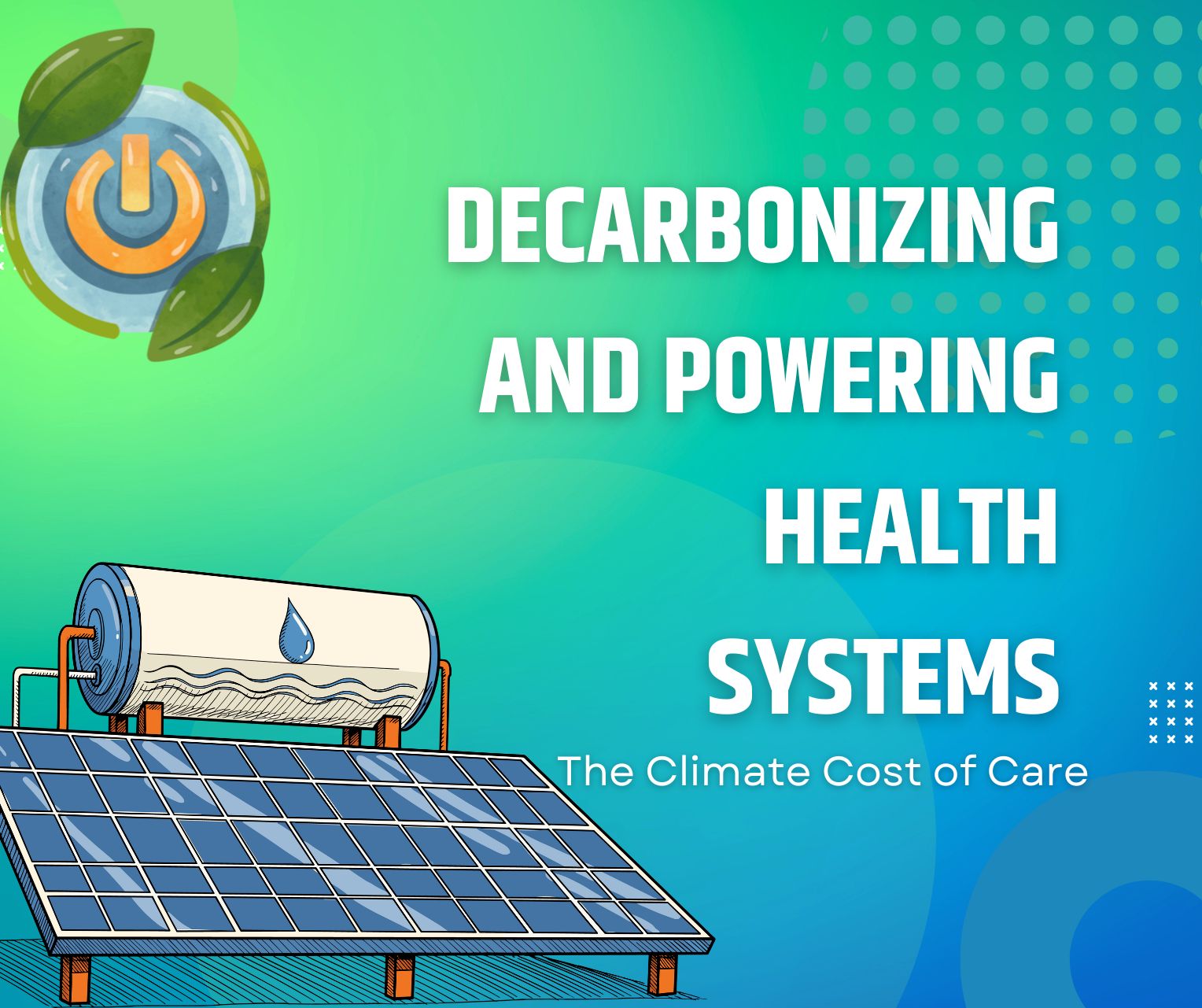
Instead of funding diesel dependency, international finance must prioritize the installation of solar photovoltaic (PV) and battery storage systems in health facilities. This offers a triple benefit;
- Mitigation – It eliminates the CO2 and particulate emissions from diesel.
- Resilience – The facility becomes an energy island, capable of operating independently when the main grid fails during a climate event.
- Adaptation – It ensures the constant power needed for cooling systems, which are vital for treating heat-related illnesses and maintaining cold chains. The WHO’s Smart Hospitals Initiative must be massively scaled up and funded.
2. Localizing and Decarbonizing the Supply Chain
We call for investment in the local production of medical goods in the Global South. This not only reduces the massive emissions footprint associated with international shipping but also strengthens regional economic self-sufficiency and reduces vulnerability to global supply chain shocks caused by climate or geopolitical events. Furthermore, global procurement bodies must prioritize suppliers committed to achieving net-zero manufacturing.
3. Formalizing Low-Carbon Targets
Governments must be held accountable for setting and meeting targets for the decarbonization of their national health systems, as outlined in the Global Road Map for Health Care Decarbonization. This includes mandatory energy efficiency audits, investment in sustainable building design, and transition plans for pharmaceutical companies.
The health sector must heal itself to heal the planet. By championing the shift to resilient, clean-powered health systems, we not only cut the dangerous Climate Cost of Care but also fundamentally strengthen the ability of the Global South to survive the climate crisis. This is a critical investment in life itself.
